by Janice | 9 Nov 2017 | Qigong, Qigong Practice Guidelines & General Information, Qigong Routines
“I’d love to do Qigong but how do I find the time to practice regularly?”. If you are someone who struggles with finding the time for yourself then you’re not alone. I understand exactly how you feel as sometimes I feel like this myself. We are all busy and sometimes life can get in the way of our best intentions. What I’ll be sharing with you in this post is how to make it easier to create a regular habit of Qigong and how to establish a Qigong routine which does not take too much time out of your busy schedule.
Janice Tucker is a practitioner of Traditional Chinese Medicine and Medical Qigong, and the founder of the Space To Relax online programme of Qigong video lessons.
Please don’t forget to subscribe to my YouTube channel by clicking the red “Subscribe” button so you don’t miss my regular videos which are full of useful health enhancing tips. These videos will help you to benefit your health and prevent illness from arising in the first place. Also please give this video a “Like” if you found it informative.
5 Tips On How To Establish A Qigong Routine
1. Integrate Qigong In To Your Day
If you are so busy that you cannot conceive where to find time to practice Qigong then this post was made for you! There is a solution. It’s not ideal as even 5 minutes of regular practice time is beneficial. However many of the Qigong exercises I teach do not require dedicated practice time. You can easily integrate them in to your day instead. Abdominal breathing is the perfect example of this. You can do it while standing in a queue, driving, walking the dog or watching TV.
2. Make The Decision To Practice
The decision to practice Qigong has to come from you. By making this commitment to yourself then you are more likely to be able to maintain your Qigong routine. If you are too busy to practice then you are precisely the person who can benefit most from regular practice because it actually frees up more time for you. Because Qigong helps to calm and focus your mind, you will be more efficient at carrying out your day to day tasks, in contrast to chasing your tail without clarity or focus. Your increased efficiency means that you will get more done in less time, leaving you with time to spend doing fun things with friends and family!
3. What Is Your Why?
Why do you want to practice Qigong regularly?
What are you struggling with right now?
How does this struggle affect you?
How do you think Qigong will help you with this?
What will that mean for your life, relationships, health and job?
Take some time to sit and write down the answers to these questions. They will give you a reason to practice Qigong and establish a Qigong routine. Whenever you feel as though you can’t be bothered to practice then refer back to your answers. They will give you your “Why” and your inspiration to get out there and practice!
4. Choose A Good Location In Which To Practice
Choosing somewhere in which you feel comfortable is very important for Qigong practice. Ideally this will be somewhere in nature like a forest or beach. However, if you live in the city it could be somewhere like a park or next to a river or canal. The location you choose also needs to be somewhere which is easy for you to get to on a daily basis. You will not be motivated to practice daily if your favourite place is half an hour away by public transport! Choosing a place that is close by and easy to get to will maximise your chances of practising daily.
5. Establish A Regular Time Of Day To Practice
The best time to practice Qigong is at a time that suits you. Often first thing in the morning is the best time for most people as it is quieter and you have also set yourself up in the best way possible for the rest of your day. However, night time might suit some of you, depending on your routine.
Practising at the same time every day helps you to develop the habit, just like cleaning your teeth, so you are less likely to skip a day once this habit is established.
What Do I Do Next?
1. Head over to my Space To Relax homepage to sign up for a free 3 part video series of Qigong lessons.
2. Please don’t forget to subscribe to my YouTube channel by clicking the red “Subscribe” button. Then you won’t miss my regular videos which are full of useful health enhancing tips. Also please give this video a “Like” if you learned more about how to establish a Qigong routine (and share with any friends or family, especially the more elderly people you know who may not be so steady on their feet).
3. If you are on Facebook head over to my free group, “Space To Relax Free Group” and leave any comments or questions for me there. I’ll be happy to answer them. Also, by joining this group, you will receive regular posts of Qigong articles and videos with really useful tips about how to use Qigong to improve your state of health.
home
by Janice | 3 Jul 2017 | Qigong, Qigong Practice Guidelines & General Information, Qigong Routines
Today I’m going to be discussing Qigong for seniors and how it can be used for regulating stress as we get older.
Janice Tucker is a practitioner of Traditional Chinese Medicine and Medical Qigong, and the founder of the Space To Relax online programme of Qigong video lessons.
Please don’t forget to subscribe to my YouTube channel by clicking the red “Subscribe” button. That way you won’t miss my regular videos which are full of useful health enhancing tips. These videos will help you to benefit your health and prevent illness from arising in the first place. Also please give this video a “Like” if you found it informative.
A couple of months ago I received and e-mail from Sally Perkins who is a content manager for a senior advice site called Senior Advisor. She had watched a previous video on my Space To Relax website called “Qigong for Stress Relief” and was interested in how Qigong could help the elderly. She very helpfully suggested that I cover the use of Qigong for seniors and how it can help them with stress relief.
Sally kindly provided me with an introduction to this post, highlighting the importance of regulating our stress levels as we age. The introduction from Sally is below followed by my top 3 tips using Qigong for seniors in order to minimise stress levels.
Sally’s Introduction – Don’t Let Stress Get You Down!
Let’s face it: we are all busy bees. As we get older, it is important to our overall mental and physical health to keep our stress levels in check, or else there are many negative health issues that will arise. There are both short and long term effects of leading a high-stress lifestyle, including:
1. Weakening the immune system
2. Insomnia and sleep issues
3. High blood pressure and high blood sugar levels
4. Skin rashes and acne breakouts
5. Digestive issues
6. Headaches and trouble focusing
By trying to avoid things that bring you stress, whether it be managing your time better at work or trying to steer clear of situations or people who might add to your frustrations, you can better maintain a healthy lifestyle. This guide will show you how to focus on ways to relax and make a true difference in your energy levels which will help you to avoid the negative impact of stress that is increasingly damaging to your health as you age.
Qigong For Seniors – My Top 3 Tips
As Sally rightly points out, if you can avoid stressful situations in the first place that will go a long way towards maintaining a healthy, balanced life. However that is not always possible due to lifestyle, family and work situations. If you do find yourself becoming stressed here are my top three Qigong for seniors tips which you can use to help yourself. This advice applies to senior members of our population and also carers of the elderly as they can also suffer from stress.
1. Breathe Into Your Belly. This Qigong exercise will instantly ground and calm your mind. You can learn how to do this by signing up for my free 3 part video series which I mention at the end of this post. Belly or abdominal breathing is Lesson 1.
2. Relax as soon as possible after experiencing stress to allow your body and mind to recover. After doing this, if you still feel stressed, refer to Lesson 3 in the free video series showing you how to get rid of “waste Qi” or energy/feelings from your body. Also take a look at one of my previous videos on the Space To Relax website called “Qigong for Cleansing“.
3. Develop a Daily Qigong Routine. A daily routine of Qigong or meditation will allow you to better cope with future stressful situations. Bit by bit you will notice that you become better at taking stressful events in your stride.
Qigong For Seniors: What Should I Do Next?
To read more about how to best reduce your stress as you get older go to senior advisor.com and read the following article on “The Many Negative Effects of Stress On Health“.
To learn the Qigong methods I mention above go to the Space To Relax homepage. There you can sign up to receive three free video lessons. They will be delivered to you by e-mail over the course of a few days so check your spam/promotions folder. Also, for a free audio meditation “Calm Your Busy Mind In 8 Minutes” scroll to the bottom of the Space To Relax homepage.
Please don’t forget to subscribe to my YouTube channel by clicking the red “Subscribe” button. Then you won’t miss my regular videos which are full of useful health enhancing tips. Also please give this video a “Like” if you learned much more about how stress affects us as we get older and what to do about it.
If you are on Facebook head over to my free group, “Space To Relax Free Group” . You can leave any comments or questions for me there. I’ll be happy to answer them. Also, by joining this group, you will receive regular posts of Qigong articles and videos with really useful Qigong tips.
If you’d like some tips on how to make changes to your home in order to continue to move around with confidence then read this guide on “Aging in Place“.
https://spacetorelax.com
by Janice | 6 Jun 2017 | Qigong, Qigong Practice Guidelines & General Information
I don’t know about you but I was familiar with yoga and what it was way before I had a clue about Qigong or even how to pronounce it! In this blog I’ll be discussing the similarities and differences between Qigong and Yoga.
Janice Tucker is a practitioner of Traditional Chinese Medicine and Medical Qigong, and the founder of the Space To Relax online programme of Qigong video lessons.
Please don’t forget to subscribe to my YouTube channel by clicking the red “Subscribe” button above so you don’t miss my regular videos which are full of useful health enhancing tips. These videos will help you to benefit your health and prevent illness from arising in the first place. Also please give this video a “Like” if you found it informative.
The Main Similarities and Differences Between Qigong and Yoga
5 Similarities Between Qigong and Yoga
1. Both are Eastern forms of exercise.
2. Qigong and Yoga both teach awareness of your body and mind.
3. Both utilise similar breathing techniques.
4. Qigong and Yoga are both whole systems involving the body, mind and posture.
5. Both are very ancient practices.
5 Differences Between Qigong and Yoga
1. Yoga tends to focus, at least in the West, on more physical postures or asanas. Qigong focuses on physical movements to a lesser extent and incorporates more of the breath and mind in its exercises.
2. Qigong movements are slower and more gentle than yoga movements. Because of this Qigong is often perceived as a bit boring and not as good at getting you fit as yoga. This is not true. Qigong, when practised regularly, can make you very strong and fit. It will unblock stagnant Qi and allow it to flow more freely so that your health improves. Do bear in mind though that Qigong does not offer you instant gratification. Significant results in terms of health are achieved over a long period of time. You should instantly feel more relaxed when you practice Qigong though! 🙂
3. Yoga originates from India. Qigong originates from China.
4. For yoga you may need slightly more athleticism than you will need for Qigong, at least how it is taught in the West. Yoga requires more movement than Qigong. Anyone of any level of mobility can perform the slow and flowing movements of Qigong, even those in a wheelchair or those with severe physical limitations.
5. Nearly every Qigong exercise improves your balance in some way. There are specific yoga balance postures but not every asana in yoga incorporates a balance element to it.
So Which Is Best For You?
If you are more athletic, you may decide that yoga is for you. If you want to address a certain medical issue then you may choose medical Qigong practice. If you are like me, you will do both. As a Qigong teacher I’m also a massive fan of yoga and attend weekly classes as I find that the two blend extremely well together and play a complementary role in enhancing my health and well-being.
What Should I Do Next?
So, if you would like to learn some Qigong for yourself got to the Space To Relax homepage. There you can sign up to receive three free video lessons which will be delivered to you by e-mail over the course of a few days. Also, for a free audio meditation “Calm Your Busy Mind In 8 Minutes” scroll to the bottom of the Space To Relax homepage.
Please don’t forget to subscribe to my YouTube channel by clicking the red “Subscribe” button. Then you won’t miss my regular videos which are full of useful health enhancing tips. Also please give this video a “Like” if you learned much more about the similarities and differences between Qigong and Yoga.
You can also head over to my free group on Facebook, “Space To Relax Free Group” and leave any comments or questions for me there. I’ll be happy to answer them. Also, by joining this group, you will receive regular postings of Qigong articles and videos with really useful tips about how to use Qigong to improve your state of health.
https://spacetorelax.com
by Janice | 15 May 2017 | Qigong, Qigong Practice Guidelines & General Information, Qigong Routines, Qigong To Help Manage Specific Health Conditions
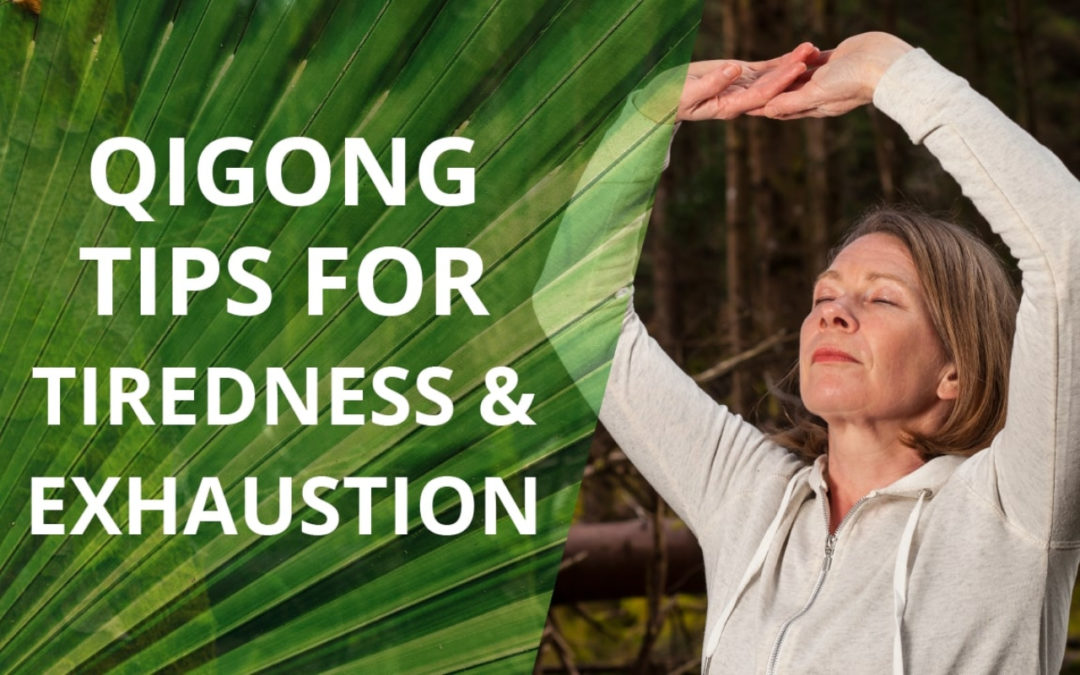
Some of the most common things my students say to me are, “I’m exhausted”, “I have no energy to motivate myself”, I’m tired all the time”. How many of you find yourselves saying these phrases, or ones like them, out loud? In this video I’m going to show you three fabulous tips using Qigong for tiredness. None of them take more than 5 minutes for you to achieve the transformation from exhausted to energised so get ready to follow along!
Janice Tucker is a practitioner of Traditional Chinese Medicine and Medical Qigong. She is also the founder of the Space To Relax online programme of Qigong video lessons.
Please don’t forget to subscribe to my YouTube channel by clicking the red “Subscribe” button so you don’t miss my regular videos which are full of useful health enhancing tips. These videos will help you to benefit your health and prevent illness from arising in the first place. Also please give this video a “Like” if you found it informative.
3 Tips On How To Use Qigong For Tiredness
1. Abdominal Breathing
By using simple abdominal breathing for only a few minutes you can extinguish exhaustion and increase your energy levels. This is because abdominal breathing is a more efficient way of breathing. You inhale more oxygen per breath than shallow chest breathing and thereby increase your energy. See my previous video blog on “How To Do Abdominal Breathing or Diaphragmatic Breathing” to learn this.
2. Simple Stretching
See the clip in the video to learn how to do a simple stretch up to the sky. This is a very simple way of utilising Qigong for tiredness.
Also, a simple twist of the upper body, head and neck will energise your whole spine with Qi and give you a lift in less than one minute if you are feeling exhausted.
3. Qigong Face Wash
Rub your hands together until they are hot then place them on your face. Rub your face up and down with your hands until you feel the heat has left the hands. This simple face wash is excellent for ridding any mental tiredness. It will instantly leave you feeling more awake and alive!
So, if you would like to learn some Qigong for yourself why not give it a go by heading over to the Space To Relax homepage? There you can sign up to receive three free video lessons which will be delivered to you by e-mail over the course of a few days. Also, for a free audio meditation “Calm Your Busy Mind In 8 Minutes” scroll to the bottom of the Space To Relax homepage to sign up for that.
Please don’t forget to subscribe to my YouTube channel by clicking the red “Subscribe” button. That way, you won’t miss my regular videos which are full of useful health enhancing tips. Also please give this video a “Like” if you learned much more about how to use Qigong for tiredness and exhaustion.
You can also head over to my free group on Facebook, “Space To Relax Free Group“. Leave any comments or questions for me there and I’ll be happy to answer them. By joining this group you will receive regular Qigong articles and videos with useful tips about how to use Qigong to improve your state of health.
https://spacetorelax.com
by Janice | 8 May 2017 | Qigong, Qigong Practice Guidelines & General Information
I am constantly asked by people, “What is Qigong?”. I often start by asking if they have ever heard of Taiji (Tai Chi). If they have then I can use their level of understanding of Tai Chi to explain about Qigong. In the video above I’ll be answering the question, “What are the differences between Qigong and Tai Chi?”.
Janice Tucker is a practitioner of Traditional Chinese Medicine and Medical Qigong, and the founder of the Space To Relax online programme of Qigong video lessons.
Please don’t forget to subscribe to my YouTube channel by clicking the red “Subscribe” button in Youtube so you don’t miss my regular videos which are full of useful health enhancing tips. These videos will help you to benefit your health and prevent illness from arising in the first place. Also please give this video a “Like” if you found it informative.
The 7 Main Differences Between Qigong and Tai Chi
1. Tai Chi is a form of Qigong
Qigong is the basis of Tai Chi. The focus of your breath and mind is cultivated in Qigong practice and is the underlying foundation of Tai Chi.
2. Tai Chi is a martial art and Qigong is used for wellness and healing
Qigong utilises specific exercises for healing. Tai Chi does not do this, even though many people practice Tai Chi for healing and wellbeing purposes. Qigong does not involve any attack/defence or fighting movements as Tai Chi does although Qigong techniques can help you to improve your power and self defence techniques if you are practising Tai Chi or Kung Fu.
3. Tai Chi and Qigong make use of different movements
Qigong includes movements which you can performed from a sitting or lying down position whereas Tai Chi generally uses standing movements. Both focus on slow movements in general, although not always.
4. Tai Chi and Qigong may work with Qi differently
Often, in Qigong, separate movements focus on specific Qi functions, especially in medical Qigong. In Tai Chi the movements tend not to do this and work more on whole body function and movement of Qi.
5. The complexity of movement in Tai Chi and Qigong is different
Qigong uses very simple movements whereas Tai Chi uses more complex stances, movements and forms.
6. Tai Chi utilises forms whereas Qigong does not
Qigong does not make use of the forms used in Tai Chi but instead is based on a series of exercises that you can tailor to your individual health needs at any particular time.
7. Qigong is more adaptive than Tai Chi
Some Tai Chi movements and stances can be difficult to perform for anyone with any physical restriction or injury. Because Qigong is more of a free form practice then the you can adapt the simple movements of Qigong to your own needs and abilities.
So, if you would like to learn some Qigong for yourself why not give it a go by heading over to the Space To Relax homepage? There you can sign up to receive three free video lessons. They will be delivered to you by e-mail over the course of a few days. Also, to get a free audio meditation “Calm Your Busy Mind In 8 Minutes” scroll to the bottom of the Space To Relax homepage.
Please don’t forget to subscribe to my YouTube channel by clicking the red “Subscribe” button. That way, you won’t miss my regular videos which are full of useful health enhancing tips. Also please give this video a “Like” if you learned much more about the differences between Qigong and Tai Chi.
You can also head over to my free group on Facebook, “Space To Relax Free Group” and leave any comments or questions for me there. I’ll be happy to answer them. Also, by joining this group, you will receive regular postings of Qigong articles and videos with useful tips about how to use Qigong to improve your state of health.
https://spacetorelax.com
by Janice | 20 Apr 2017 | Qigong, Qigong Practice Guidelines & General Information, Qigong Routines
Qigong is the practice of co-ordinating your movement, breath and mind to promote the free flow of energy (Qi) around your body. In this way the body can heal itself and come back into a healthy balance. One of the difficulties my students experience is how to focus during Qigong and stay relaxed enough to allow for the open flow of Qi. They often find it hard to balance the mind, the breath and the movement with the relaxation that is necessary in order to promote unimpeded Qi flow. This video on how to focus during Qigong will show you exactly how to do this.
Janice Tucker is a practitioner of Traditional Chinese Medicine and Medical Qigong. She is also the founder of the Space To Relax online programme of Qigong video lessons.
Please don’t forget to subscribe to my YouTube channel so you don’t miss my regular videos which are full of useful health enhancing tips. These videos will help you to benefit your health and prevent illness from arising in the first place. Also please give this video a “Like” if you found it informative.
How To Focus During Qigong Practice
1. “Sloppy”, casual focus of your mind
Pay “sloppy” almost casual focus with your mind to what you are doing. Do not concentrate with a “laser beam” focus on what you are trying to do. Rather, pay fleeting attention to your movements and breath, then let it go.
2. Observe
Observe what is happening as though you are watching and playing no part. You are simply observing the exercise, the flow of Qi, the breath and sensations in your body.
3. Relax and breathe
All you are doing is allowing, making a clear pathway for the Qi to flow. You do this by relaxing. Relaxation is the key.
4. The Qi Reorders Itself
By relaxing the Qi reorders itself because you are not doing anything to block this from happening.
5. Health and balance are restored
Once the Qi has reordered itself this promotes the self-healing mechanisms in your body and mind so that your physical, mental and emotional health come back in to equilibrium.
Summary
If you focus too much, like a laser beam, all you will do is give yourself a headache. Don’t try to force things too much. You are not moving the Qi with your body, breath or mind. The more you try to force things to happen the more the Qi stagnates. You are simply relaxing and breathing, paying casual attention so that the pathways along which Qi can flow become more open, unobstructed and unimpeded. It should feel effortless, calm and relaxed. This is the whole essence of how to focus during Qigong practice.
What Do I Do Next?
So, now you know how to focus during Qigong practice why not give it a go by heading over to the Space To Relax homepage? There you can sign up to receive three free video lessons which will be delivered to you by e-mail over the course of a few days. Also, for a free audio meditation “Calm Your Busy Mind In 8 Minutes” scroll to the bottom of the Space To Relax homepage to sign up for that.
You can also head over to my free group on Facebook, “Space To Relax Free Group” and leave any comments or questions for me there. I’ll be happy to answer them. Also, by joining this group, you will receive regular Qigong articles and videos with useful tips about how to use Qigong to improve your state of health.
Please don’t forget to subscribe to my YouTube channel so you don’t miss my regular videos which are full of useful health enhancing tips. Also please give this video a “Like” if you learned much more about how to focus during Qigong practice.
https://spacetorelax.com