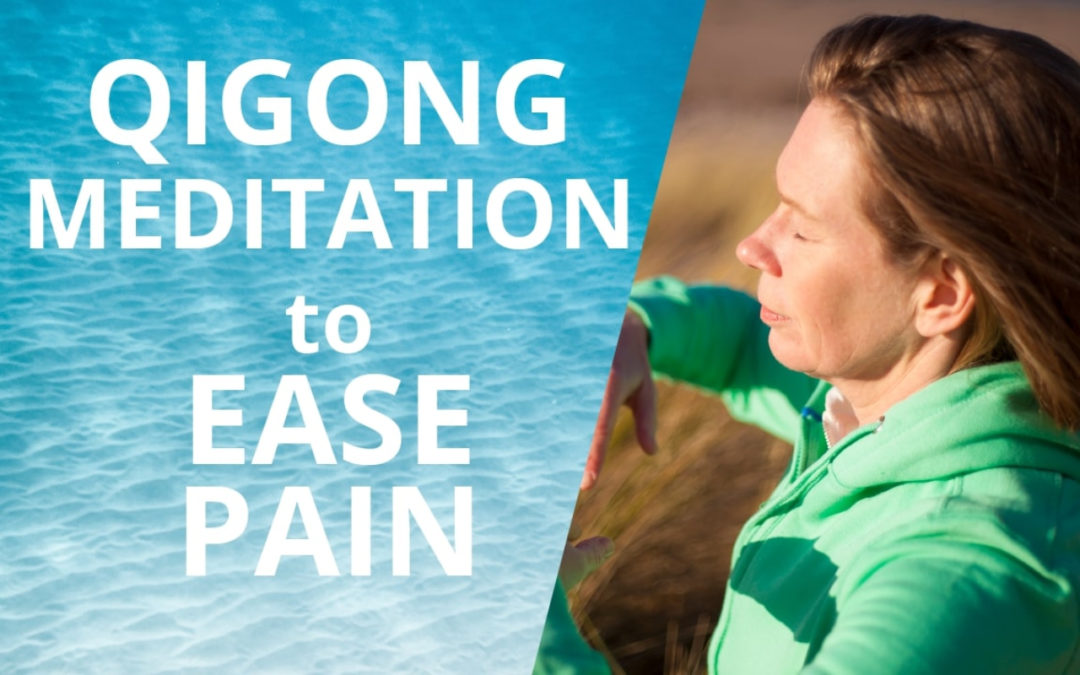
This is a replay of a live session showing you a Qigong routine for Spring, taught by myself, Dr. Janice Tucker. I have been teaching Qigong for two decades and am the founder of the Space To Relax Programme of Qigong video lessons. I’m also a practitioner of acupuncture and Traditional Chinese Medicine. You can join my live classes on Zoom every Thursday at 4 pm Irish time. Click here to join us (lesson replays sent out by email in case you can’t make it).
These classes are free and everyone is welcome. However, if you’d like to contribute as a thank you for the class click here. 50% of donations will go to the ICU staff in my local hospital in Co. Kerry. The other 50% goes towards the upkeep of this website.
Qigong Meditation to Ease Physical Discomfort and Pain – Introduction
If you have been enjoying these classes during the last couple of months and you’d like to donate something by way of a thank you, I’ll be giving 50% of donations to the ICU nurses in my local hospital. Click here to donate.
Introduction To Qigong Meditation to Ease Physical Discomfort and Pain
In this video you can follow along with a Qigong meditation to ease physical discomfort and pain. Pain is something that we all experience from time to time so this is a useful technique to employ. It’s also very simple. We combine the breath and the mind in order to ease discomfort and pain wherever we feel it in our bodies. You can practice this method from a standing, sitting or prone posture which means it’s suitable for anyone, no matter how much pain may be restricting your range of movement.
Method- Qigong Meditation to Ease Physical Discomfort and Pain
1. Adopt the Qigong sitting, standing or lying down posture (more here).
2. Begin with Abdominal Breathing to get into the “Qigong State” of calm and relaxation (more details here).
3. Follow along with my voice as I talk you through the meditation.
4. Choose an area of your body that is causing you discomfort or pain. Follow along with my voice as I talk you through a meditation to help ease the discomfort.
5. End with Abdominal Breathing.
6. Massage the area of discomfort or pain (if you can reach it) in order to promote circulation and nourishment in the area.
Integration into Your Day
You can perform this meditation anytime you have a few minutes. If you would like to listen to an audio of me talking you through this meditation then my Qigong meditations bundle is here.
Previous Live Lesson Replays
Previous live lesson replays are listed below and can be found on my blog page.
Click the image above to follow along with the Qigong class!
What Can I Do Next?
To sign up and attend the live online sessions please click here. Classes are free of charge and suitable if you’re a beginner or have more Qigong experience. Once you sign up I’ll send details to your email with links to the Zoom classes (check your junk/spam folders for notifications). Please share this information with your family and friends as everyone is more than welcome.
If you’d like to take your practice to the next level with my structured, step-by-step Space To Relax Qigong programme of 50 video lessons accompanied by audio and PDF files with support from me every step of the way then click here.
To get my free part video series of 3 Qigong lessons which will be delivered to you by email over the course of one week please go to my homepage. In these lessons you’ll learn more about abdominal breathing and Qi movement. In addition, you’ll learn how to rid waste Qi from your body order to feel more relaxed and energised.
You can also click the red “subscribe” button to join my YouTube channel. That way, you won’t miss any future Qigong lessons from me.
Feeling stiff and inflexible, or feeling pain in your joints is debilitating and can be a source of misery and depression for many people. Approximately 350 million people worldwide have arthritis (www.medicinenet.com) which makes this a huge problem for both the healthcare profession and the sufferers themselves. Although there is no cure for arthritis, there are many practices and methods we can adopt to help minimise the progression of this condition. In the video on this page you will learn how to use Qigong exercises for arthritis and other related bone and joint conditions.
Please don’t forget to subscribe to my YouTube channel by clicking the red “Subscribe” button. That way you miss my regular videos which are full of useful health enhancing tips. These videos will help you to enhance your health and prevent illness from arising in the first place. Also please give this video a “Like” if you found it informative.
What Are The Symptoms of Arthritis?
Symptoms of arthritis include pain and limited function of joints. Inflammation of the joints from arthritis is characterised by joint stiffness, swelling, redness, and warm. Tenderness of the inflamed joint can be present.
In Traditional Chinese Medicine terms your symptoms are due to a lack of smooth and open flow of blood, fluid and Qi (energy) through the joints. This is often where things tend to stagnate because there are lots of nooks and crannies in the joints for the blood, fluid and energy to flow though. The narrowing of these circulatory pathways is a bit like the narrowing of a motorway caused by road works; if a lane is closed everything backs up in the area!
The Solution – Qigong Exercises For Arthritis
Any moving Qigong methods in general are perfect for dealing with arthritis. This is because they smooth the flow of energy (Qi) and blood flow through the area. In Chinese Medicine terms, it is a stagnation or blockage of the flow of Qi and blood which can cause pain. However there are a couple of methods which are particularly useful to help you regulate arthritis more specifically.
1. Qigong for Cleansing. Watch my previous video on “Qigong For Cleansing“. You can use this method of Qigong for arthritis because it helps to rid any waste Qi from your body, i.e. stiffness, aches, heaviness and pain.
2. For back pain. Watch my previous video on “Qigong Standing Posture“. This method is exceptionally helpful if you suffer with arthritis of the spine or knees. This is because it provides you with a standing posture which will avoid any obstruction in the flow of Qi and blood through two areas which are particularly prone to stagnation and pain, the lower back and neck.
3. For morning stiffness and pain. If you feel especially stiff in the mornings and it takes you a while to get going then it will be very helpful for you to start the day with a few gentle movements. This will help you to get going quicker in the mornings! Click here for my Qigong morning routine.
4. For fibromyalgia and related muscle stiffness and pain. A few of my Space To Relax online Qigong members requested the video I made here as they suffer with fibromyalgia. If you also suffer with muscle stiffness and pain in addition to joint stiffness watch my previous video on” Qigong for Fibromyalgia“.
What Do I Do Next?
1. Head over to my Space To Relax homepage. There you can sign up for a free 3 part video series of Qigong lessons. These three lessons are perfect Qigong exercises for arthritis, in addition to the videos referred to above. They will help ease out stiff and inflexible joints. In addition they will help you to manage arthritis to the best of your ability.
2. Subscribe to my YouTube channel by clicking the red “Subscribe” button. That way you won’t miss my regular videos which are full of useful health enhancing tips. Also please share with me in the comments box what you do to help relieve pain in your joints.
3. Join my free Facebook group, “Space To Relax Free Group” and leave any comments for me there. I’ll be happy to answer any questions on Qigong exercises for arthritis. Also you will receive regular posts with useful tips about how to use Qigong to improve your state of health.
4. You may want to consider looking into how various supplements such as turmeric supplements and anti inflammatory foods can help you to manage arthritis and joint pain.