In Chinese astrology, the New Year begins on the second new moon after the winter solstice.
Chinese astrology does not offer specific predictions about your future. Instead, it describes the energetic qualities of a particular year. When you understand this, you can structure your goals and activities to align with that energy so you are “swimming with the tide” rather than against it. For example, in a year focused on reflection and consolidation, it may feel easier to slow down, reassess, and refine your plans rather than push ahead with excessive action.
Save major action for a year when the energy is more forward-moving and purposeful (like the year ahead!). When we move in accordance with the flow of energy (Qi), we are in harmony with nature, and life tends to feel more fluid, with less effort or struggle.
There are twelve animals in the Chinese zodiac, each with its own characteristics and bringing its own energy to its year. There are also five elements (Wood, Fire, Earth, Metal, Water), and each animal year is influenced by one of these elements. The elements shape how the animal expresses itself. With twelve animals and 5 elements, the complete cycle lasts 60 years.
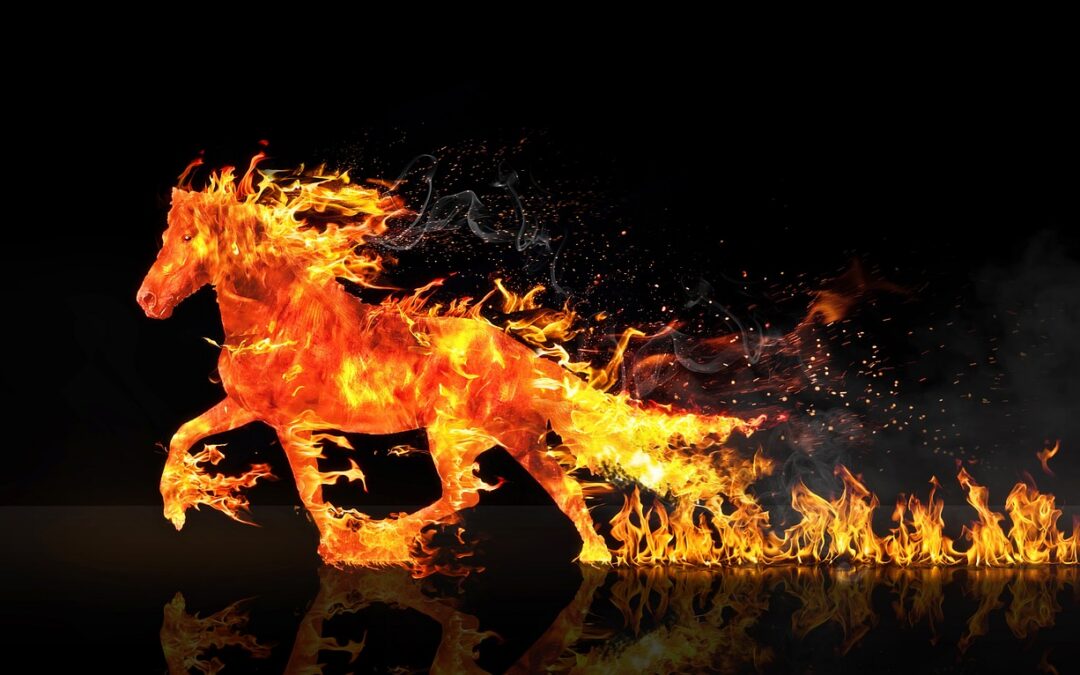
2026 is the Year of the Fire Horse. The last Fire Horse year was in 1966 – the year before I was born!
Energetic Characteristics of a Horse Year
2025 was the Year of the Snake. The energy of a Snake Year is one of recalibration – taking stock of where you are, shedding old habits and de-cluttering (like a snake shedding its skin). The energy also supports the development of intuition and wisdom. If you have been flowing with the energy of the Snake Year, you will be well prepared for the dynamic year ahead.
The Chinese New Year of the Horse begins on 17th February 2026. This year is characterised by much more propulsion and momentum than the Snake Year. Think of the qualities of the Horse: speedy, enthusiastic, vibrant, flowing, while also capable of great endurance and strength. This is a year for action and adventure! The Horse also represents freedom – moving forward, unimpeded, with speed, spirit, confidence and purpose.
However, a galloping horse can also be wild, scattered and rebellious – in danger of running out of steam if left unchecked. Compare this with a calm, trained horse: strong, steady, intentionally moving forward at a measured pace with clear direction. Learning how to harness the “wild horse” energy will be essential in making the most of this year.
Energetic Characteristics of a Fire Year
When you think of Fire, warmth and heat likely come to mind. A Fire year expresses action, movement, intensity and passion. Fire is more Yang in nature, moving outward and upward. This high energy can feel powerful and motivating, but it also carries the risk of restlessness or scattered focus. If it moves too fast for too long, burnout becomes a real possibility.
Combining Horse with Fire
As you can see, the energy of the Horse and the Fire element amplify one another. We are entering a strong Yang year – warming, moving and activating. This is not a year for consolidation or prolonged preparation. It is a year for purposeful forward movement, personal growth, and starting (and completing) projects with confidence and endurance, unhindered by too many obstacles. This year brings enthusiasm and passion, underpinned by the gentle, steady, powerful energy of the Horse.
That said, we must avoid moving so rapidly that we lose direction and run out of steam, resulting in a long recovery period. The key theme of a Fire Horse Year is intentional movement with stamina, avoiding burnout while allowing some space for rest and recovery.
Health and the Fire Horse Year
To optimise and maintain our health, we need to balance the fast-paced Fire Horse energy with calming and cooling practices.
In Traditional Chinese Medicine (TCM), the Horse is associated with the Heart system (and its paired organ system, the Small Intestine). These govern emotional stability, calmness of mind, mental clarity, circulation, sleep quality and memory. The Fire element is also linked to the Heart system in TCM.
Excess Fire Horse energy may lead to a scattered mind, irritability, impatience, poor sleep, anxiety or heart palpitations. The Heart system can become agitated, leading to a sense of unanchoredness or ungroundedness. We may become unsure and nervous about how to move forward confidently.
When we utilise practices that guide and ground Fire Horse energy (Qi), it can move powerfully and productively, supporting meaningful change without causing burnout. The goal is to harness this dynamic, wild Fire Horse energy and channel it sustainably, rather than letting it impulsively gallop off without direction.
Practices To Optimise Our Health in 2026
In general, focus on healthcare practices which balance Heart Fire and calm the mind. Think cooling, calming and grounding. The aim is to make the most of this dynamic year while staying emotionally centred.
Acupuncture, Chinese herbs, Qigong and Tai Chi. These elements of Traditional Chinese Medicine can help calm the mind and protect the Heart system from excess heat.
Minimise stress, reduce caffeine, and prioritise good sleep to balance Heart Fire.
Eat cooling foods such as cucumber, spinach, courgette, mint, mung beans, barley, pears and watermelon to balance Fire and restore equilibrium. Stay well hydrated. Limit spicy or greasy foods, which may increase internal Heat. (Note: those who tend to feel constitutionally cold may not need excessively cooling foods.)
Physical Exercise. The strong, forward-moving energy of this year may tempt you to overdo it. Regular movement helps channel energy, but it is important to recognise when rest is needed.
Grounding practices such as walking barefoot, stretching and Qigong can provide a stable foundation and prevent exhaustion.
Spend time in nature. Journaling, breathwork and meditation can regulate the nervous system and balance Heart Fire.
Develop awareness around rest and recovery. Balance strong Yang activity with Yin restoration (cooling, moistening, nourishing, replenishing). Avoid becoming overly busy without clear direction. Make intentional plans so that Fire Horse energy moves forward productively.
De-clutter your environment to allow strong Yang Qi to flow freely and without obstruction.
Recommended Qigong Exercises For 2026
Below is a selection of Qigong practices that can help balance strong Yang energy with calming Yin qualities. Choose one for 5-10 minutes, or combine two or three to create your own routine.
Abdominal Breathing – to calm the mind and nourish Yin, helping to anchor Yang energy.
By understanding the energetic qualities of the Fire Horse Year, we place ourselves in the best possible position to harness its potential. Focus on steady, enduring rhythm, clear direction and balanced Yin and Yang. With intentional movement and thoughtful self-care, we can move through 2026 with strength, clarity and vitality.
This is a replay of a live session showing you a Qigong routine for Spring, taught by myself, Dr. Janice Tucker. I have been teaching Qigong for two decades and am the founder of the Space To Relax Programme of Qigong video lessons. I’m also a practitioner of acupuncture and Traditional Chinese Medicine. You can join my live classes on Zoom every Thursday at 4 pm Irish time. Click here to join us (lesson replays sent out by email in case you can’t make it).
These classes are free and everyone is welcome. However, if you’d like to contribute as a thank you for the class click here. 50% of donations will go to the ICU staff in my local hospital in Co. Kerry. The other 50% goes towards the upkeep of this website.
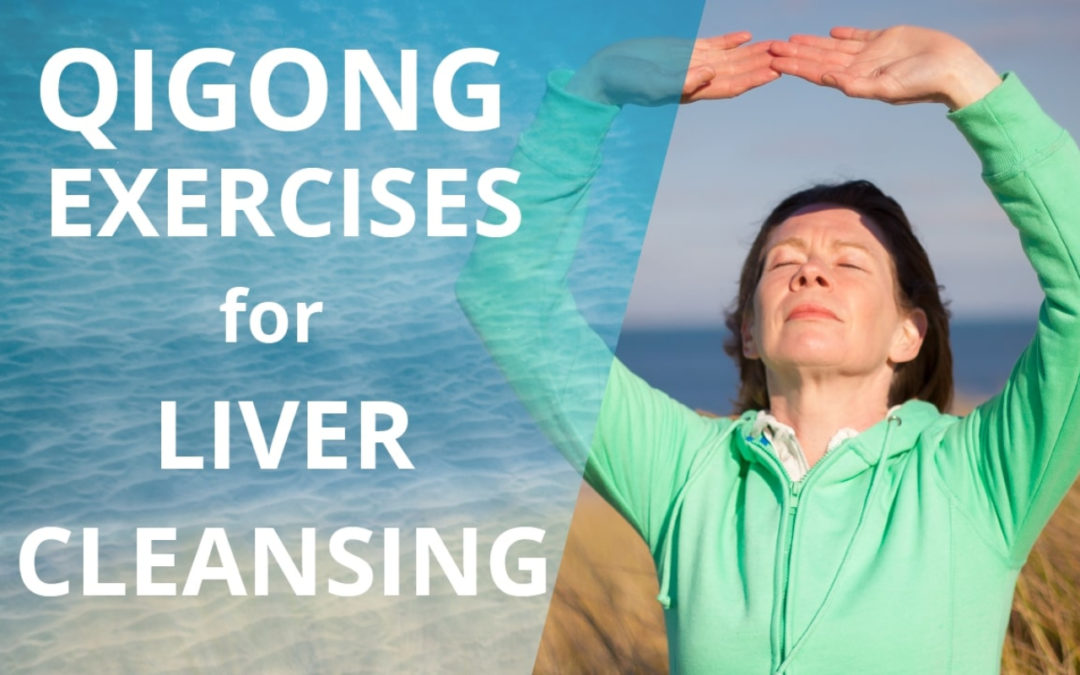
Liver Cleansing Qigong Exercises – Introduction
In terms of Traditional Chinese Medicine (TCM), the Liver System functions to regulate the smooth and harmonious flow of Qi. It also stores the Blood, releasing it when needed to provide you with physical stamina. The eyes are the sense organs associated with the Liver and its associated emotion is anger/frustration.
Liver Qi is depleted by overwork/pushing/striving as is common in modern day life. Liver is responsible for good organisation and planning but overdoing this can also deplete Liver Qi. Overconsumption of alcohol or drugs also tends to exhaust and overheat the Liver system.
Some symptoms of unhealthy functioning of Liver Qi include:
muscle tension and cramps;
headaches and migraine;
eye problems (dry, gritty eyes/blurred vision);
mood swings;
irregular menstruation;
waking up in the middle of the night and not being able to get back to sleep;
anger and frustration;
aches and pains in the sides of the body.
Method for Using Liver Cleansing Qigong Exercises
Begin by taking a comfortable standing (more on Qigong stance here) or sitting position (more on seated Qigong here).
Settle into your practice by relaxing your body and mind with Abdominal Breathing.
Discharge waste and stagnant Liver Qi by using the “Xu” sound taken from the Six Healing Sounds Qigong method.
Perform the “Circles” exercise three times to smooth the flow of Qi in the four directions.
Tonify your Liver Qi with the eyes closed, visualising the position of the Liver. Inhale green (the associated colour of the Liver) into the Liver organ. As you exhale say to yourself “Relax”. Perform this for as long as you feel you need to in order to feel calm and relaxed on the inside.
Consolidate your practice with a few abdominal breaths, taking time to observe any changes in the state of your body and mind.
Dietary and Lifestyle Advice To Improve Liver Health
Sour foods, fermented foods, dark green leafy foods.
Sufficient rest – stop overworking and pushing yourself even when you feel exhausted.
Any stretching exercises, especially side bends and twists to stretch the part of the Liver channel which runs along the sides of the lower torso and up through centre of the breasts.
Integrating Liver Cleansing Qigong Exercises Into Your Day
Perform this whole routine, or only part of it, whenever you have a few minutes. This Qigong method works best if you can find a few minutes each day to practice. Little by little, day by day, you will start to observe that you feel a little more comfortable and at ease, both physically and mentally.
Please watch the following videos I made previously which may also help you resolver any Liver related symptoms:
Previous live lesson replays are listed below and can be found on my blog page.
Click the image above to follow along with the Qigong class!
What Can I Do Next?
To sign up and attend the live online sessions please click here. Classes are free of charge and suitable if you’re a beginner or have more Qigong experience. Once you sign up I’ll send details to your email with links to the Zoom classes (check your junk/spam folders for notifications). Please share this information with your family and friends as everyone is more than welcome.
If you’d like to take your practice to the next level with my structured, step-by-step Space To Relax Qigong programme of 50 video lessons accompanied by audio and PDF files with support from me every step of the way then click here.
To get my free part video series of 3 Qigong lessons which will be delivered to you by email over the course of one week please go to my homepage. In these lessons you’ll learn more about abdominal breathing and Qi movement along with how to rid waste Qi from your body in order to feel more relaxed and energised.
You can also click the red “subscribe” button to join my YouTube channel. That way, you won’t miss any future Qigong lessons from me.
This is a replay of a live session showing you a Qigong routine for Spring, taught by myself, Dr. Janice Tucker. I have been teaching Qigong for two decades and am the founder of the Space To Relax Programme of Qigong video lessons. I’m also a practitioner of acupuncture and Traditional Chinese Medicine. You can join my live classes on Zoom every Thursday at 4 pm Irish time. Click here to join us (lesson replays sent out by email in case you can’t make it).
These classes are free and everyone is welcome. However, if you’d like to contribute as a thank you for the class click here. 50% of donations will go to the ICU staff in my local hospital in Co. Kerry. The other 50% goes towards the upkeep of this website.
Qigong For Trauma Release and Shock – Introduction
When we go into shock or suffer trauma, our body visibly shakes. In this Qigong exercise, we make use of this shaking movement to release any trauma which may have been bottled up inside the body for years. This is never a good thing as it can lead to a manifestation of physical symptoms such as shoulder, back or stomach pain. Post Traumatic Stress Disorder (PTSD) can also be a result of trauma, shock or emotions which have not been healthily dealt with and processed by the physical body and mind.
The Qigong exercises shown in this video can help you:
1. Release old stress patterns which manifest as pain, discomfort or stiffness as a result of holding trauma and shock inside the physical body;
2. Increase your energy levels as you let go of “bracing the body” against trauma in an attempt to hold it inside;
3. Discharge any energy or emotions which are being held inside the body leading to a softening of the muscles.
Method for Using Qigong For Trauma Release and Shock
Begin by taking a comfortable standing (more on Qigong stance here) or sitting position (more on seated Qigong here).
Settle into your practice by relaxing your body and mind with Abdominal Breathing.
Shake and twist the arms and hands, relaxing the muscles and joints as you do this.
Lift the arms as you inhale, drop the arms and bend your knees as you exhale through the mouth.
Hold the arms at shoulder level, shaking and twisting them in this position.
Let your body move in whichever direction it leads you in order to release any tension and ease any remaining areas of tension.
Perform the “Circles” exercise three times to smooth the flow of Qi in the four directions.
Consolidate your practice with a few abdominal breaths, taking time to observe any changes in the state of your body and mind.
Integrating Qigong For Trauma Release and Shock Into Your Day
Perform this whole shaking Qigong routine, or only part of it, whenever you have a few minutes. This Qigong method works best if you can find a few minutes each day to practice. Little by little, day by day, you will start to observe that you feel a little more comfortable and at ease.
Please watch the following videos I made previously which may also help you release any pent up emotions:
For anyone with PTSD you may want to consider NADA Ear Acupuncture treatment. More information on this is here.
Previous Live Lesson Replays
Previous live lesson replays are listed below and can be found on my blog page.
Click the image above to follow along with the Qigong class!
What Can I Do Next?
To sign up and attend the live online sessions please click here. Classes are free of charge and suitable if you’re a beginner or have more Qigong experience. Once you sign up I’ll send details to your email with links to the Zoom classes (check your junk/spam folders for notifications). Please share this information with your family and friends as everyone is more than welcome.
If you’d like to take your practice to the next level with my structured, step-by-step Space To Relax Qigong programme of 50 video lessons accompanied by audio and PDF files with support from me every step of the way then click here.
To get my free part video series of 3 Qigong lessons which will be delivered to you by email over the course of one week please go to my homepage. In these lessons you’ll learn more about abdominal breathing and Qi movement along with how to rid waste Qi from your body order to feel more relaxed and energised.
You can also click the red “subscribe” button to join my YouTube channel. That way, you won’t miss any future Qigong lessons from me.
This is a replay of a live session showing you a Qigong routine for Spring, taught by myself, Dr. Janice Tucker. I have been teaching Qigong for two decades and am the founder of the Space To Relax Programme of Qigong video lessons. I’m also a practitioner of acupuncture and Traditional Chinese Medicine. You can join my live classes on Zoom every Thursday at 4 pm Irish time. Click here to join us (lesson replays sent out by email in case you can’t make it).
These classes are free and everyone is welcome. However, if you’d like to contribute as a thank you for the class click here. 50% of donations will go to the ICU staff in my local hospital in Co. Kerry. The other 50% goes towards the upkeep of this website.
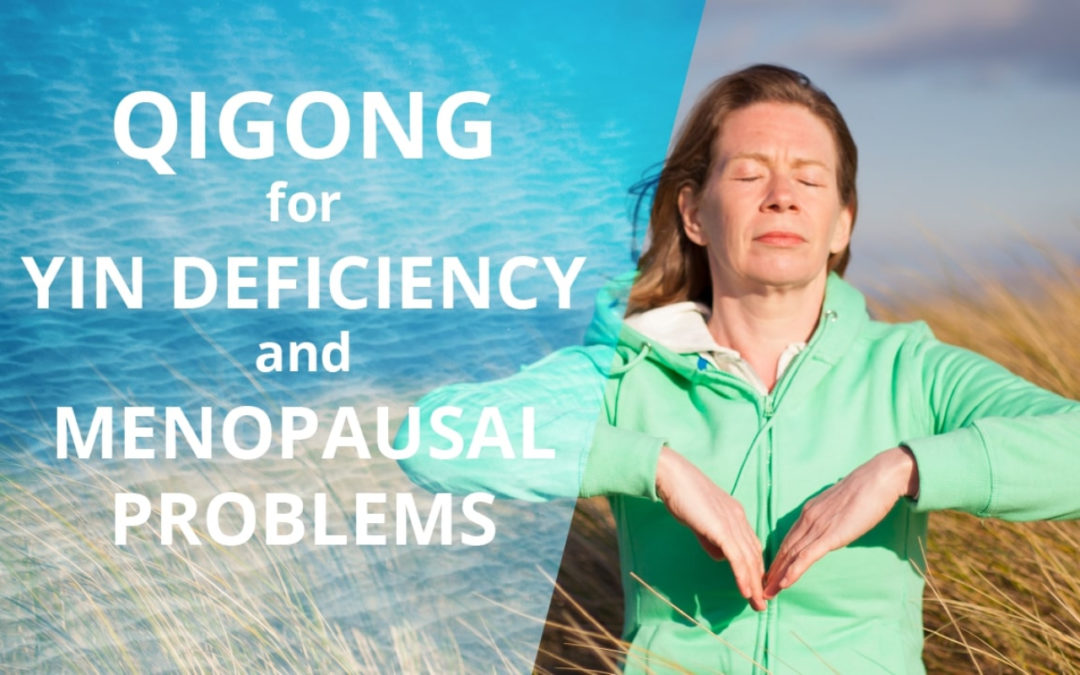
Qigong For Yin Deficiency and Menopausal Symptoms – Introduction
The Yin functions of the body and mind are to do with cooling, moistening and nourishing. Yin is nourished by rest and deep nutrition. When we become exhausted through overwork and overactivity our consequent exhaustion depletes the Yin. If we don’t get enough sleep and take time to rest during the day then our Yin is not fully replenished and the “tank runs on empty”
Causes of Yin Deficiency
The causes of Yin Deficiency are many. The list below indicates a few of the main ones:
dehydration;
childbirth;
chronic illness;
overwork;
diet low in vitamins and minerals;
frequent exposure to air-conditioning;
exposure to electromagnetic fields (too much screen time);
constantly being “on the go” – pushing to get things done even when you feel exhausted;
excessive sexual activity.
Signs & Symptoms of Yin Deficiency
The lack of Yin’s cooling, moistening and nourishing functions can manifest in a range of symptoms such as:
night sweats and hot flushes;
restlessness, anxiety and/or irritability;
poor memory;
headache/migraine;
exhaustion;
backache or deep ache in the bones;
poor appetite;
palpitations;
low-grade fever;
heat in the palms, soles of feet or centre of the chest;
dry, sore throat or dry cough;
difficulty sleeping.
Note: This is a general list. Just because you exhibit one or more of these symptoms does not necessarily mean that you are Yin deficient. It is always best to seek advice from a trained practitioner of Traditional Chinese Medicine who will be able to make an accurate diagnosis for you, rather than attempt to diagnose yourself.
How To Nourish Yin
The key component to nourishing your Yin is rest and deep nourishment. Plenty of sleep, taking time to rest during the day and eating nutrient-rich foods are especially important in the replenishment of your Yin. Meditation and Qigong come to the fore if you want to restore the healthy functioning of your Yin as they are inwardly focused, reflective and tranquil practices. They give you the “breathing space” in which to cultivate your Yin. By allowing for your Qi to turn away from external stimuli and move inward, this gives your Yin the opportunity to regenerate.
Method for Using Qigong For Yin Deficiency and Menopausal Symptoms
Begin by taking a comfortable standing (more on Qigong stance here) or sitting position (more on seated Qigong here).
Settle into your practice by relaxing your body and mind with Abdominal Breathing.
Use the healing sound related to the Heart system which is part of the “Six Healing Sounds” Qigong method.
Follow along with the Qigong meditation, “Relax, Expand and Nourish The Heart” to calm the mind and nurture the Yin.
For women with Yin deficiency symptoms related to menopause use an ovary massage to help alleviate symptoms of cramps, low libido and dryness.
Consolidate your practice with a few abdominal breaths, taking time to observe any changes in the state of your body and mind.
Integrating Qigong For Yin Deficiency and Menopause Into Your Day
There are no excuses for not having time to implement this practice! Taking the time to pause, rest and breathe for a few minutes per day can significantly reduce your symptoms of Yin deficiency. If you take the time to pay yourself some attention, you will most likely notice that the more you do, the more exhausted you become and the more prevalent your Yin deficiency symptoms. The more rested and relaxed you are, the less noticeable your Yin deficiency symptoms. So taking a rest is part of the work to restoring a healthy balanced body and mind. There is no need to feel guilty about this!
Please take a look at the following blog posts below for more Qigong methods which may help you to further minimise symptoms of Yin deficiency and menopause. Qigong for:
Click the image above to follow along with the Qigong class!
What Can I Do Next?
To sign up and attend the live online sessions please click here. Classes are free of charge and suitable if you’re a beginner or have more Qigong experience. Once you sign up I’ll send details to your email with links to the Zoom classes (check your junk/spam folders for notifications). Please share this information with your family and friends as everyone is more than welcome.
If you’d like to take your practice to the next level with my structured, step-by-step Space To Relax Qigong programme of 50 video lessons accompanied by audio and PDF files with support from me every step of the way then click here.
To get my free part video series of 3 Qigong lessons which will be delivered to you by email over the course of one week please go to my homepage. In these lessons you’ll learn more about abdominal breathing and Qi movement along with how to rid waste Qi from your body order to feel more relaxed and energised.
You can also click the red “subscribe” button to join my YouTube channel. That way, you won’t miss any future Qigong lessons from me.
This is a replay of a live session showing you a Qigong routine for Spring, taught by myself, Dr. Janice Tucker. I have been teaching Qigong for two decades and am the founder of the Space To Relax Programme of Qigong video lessons. I’m also a practitioner of acupuncture and Traditional Chinese Medicine. You can join my live classes on Zoom every Thursday at 4 pm Irish time. Click here to join us (lesson replays sent out by email in case you can’t make it).
These classes are free and everyone is welcome. However, if you’d like to contribute as a thank you for the class click here. 50% of donations will go to the ICU staff in my local hospital in Co. Kerry. The other 50% goes towards the upkeep of this website.
Qigong For Sinus and Headache – Introduction
These classes are free and everyone is welcome. However, if you’d like to contribute as a thank you for the class this week it’s not too late to donate to a worthy cause. 100% of donations from Friday 7th August – Friday 14th August will go to the RNLI local branch in Fenit, County Kerry, Ireland by way of a thank you to our lifeboat volunteers for risking their lives to save others. This is to mark my 4.5km swim (!!!) challenge across Tralee Bay which I completed in 1 hour 44 minutes (without a wetsuit!) on Saturday 8th August. The conditions were glassy calm and sunny – a sublime swim if ever there was one! Click here if you’d like to donate.
Introduction To Qigong for Sinus and Headache
For those of you who are sufferers, you will have experienced that sinus congestion can often worsen in colder weather. This is because cold causes body fluids to move more slowly and stagnate. Sinus congestion can also be more prevalent if you have a deviated septum or nasal polyps. Congestion can cause pressure and painful headaches are often associated with sinus conditions.
In Traditional Chinese Medicine (TCM) and Qigong the initial focus is on dispersing the fluid which is stuck in the sinus cavities. Once it is mobilised then the body can naturally rid this excess.
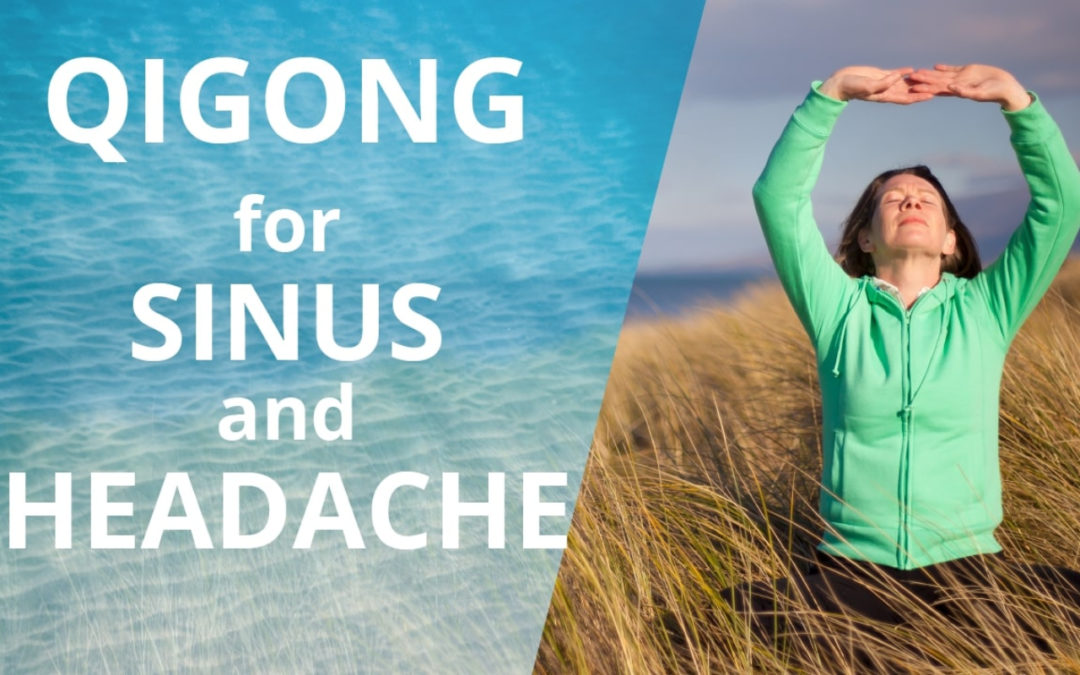
In this video you can follow along with some simple Qigong and an acupressure point to help you to disperse thick and sticky mucus in the sinuses. Also, it is important to consider avoiding certain mucus producing foods at this time so you’ll find more details on these below.
Method for Using Qigong For Sinus and Headache
Begin by taking a comfortable standing (more on Qigong stance here) or sitting position (more on seated Qigong here).
Settle into your practice by relaxing your body and mind with Abdominal Breathing.
Follow along with the “Looking Back Over Shoulder” exercises. This is one of the movements which you can learn in much more detail as part of the “8 Pieces of Brocade” method in my Space to Relax Programme of online Qigong video lessons.
Locate and massage point “Yingxiang” (Large Intestine 20), called “Welcome Fragrance” in English.
Consolidate your practice with a few abdominal breaths, taking time to observe whether your nasal passages and sinuses feel more open. If you notice mucus dripping down the back of the throat that is a good sign; you have mobilised some thick and sticky Phlegm!
It is a good idea to avoid mucus producing foods in order not to add to the problem. These include dairy products, refined foods (e.g. white flour), too much sweet food, greasy food and food that is too cold (e.g. ice cream).
Integrating Qigong For Sinus and Headache Into Your Day
Use the simple movements of Looing Back Over Shoulder whenever you have a few moments. If you have an active sinus infection you can practice this up to 5 times per day. You can also massage point Yingxiang whenever you feel any nasal blockage or to relieve sinus pressure.
Please take a look at the following blog posts below for methods to combine with these in order to further help manage sinus congestion.
Previous live lesson replays are listed below and can be found on my blog page.
Click the image above to follow along with the Qigong class!
What Can I Do Next?
To sign up and attend the live online sessions please click here. Classes are free of charge and suitable if you’re a beginner or have more Qigong experience. Once you sign up I’ll send details to your email with links to the Zoom classes (check your junk/spam folders for notifications). Please share this information with your family and friends as everyone is more than welcome.
If you’d like to take your practice to the next level with my structured, step-by-step Space To Relax Qigong programme of 50 video lessons accompanied by audio and PDF files with support from me every step of the way then click here.
To get my free part video series of 3 Qigong lessons which will be delivered to you by email over the course of one week please go to my homepage. In these lessons you’ll learn more about abdominal breathing and Qi movement along with how to rid waste Qi from your body order to feel more relaxed and energised.
You can also click the red “subscribe” button to join my YouTube channel. That way, you won’t miss any future Qigong lessons from me.